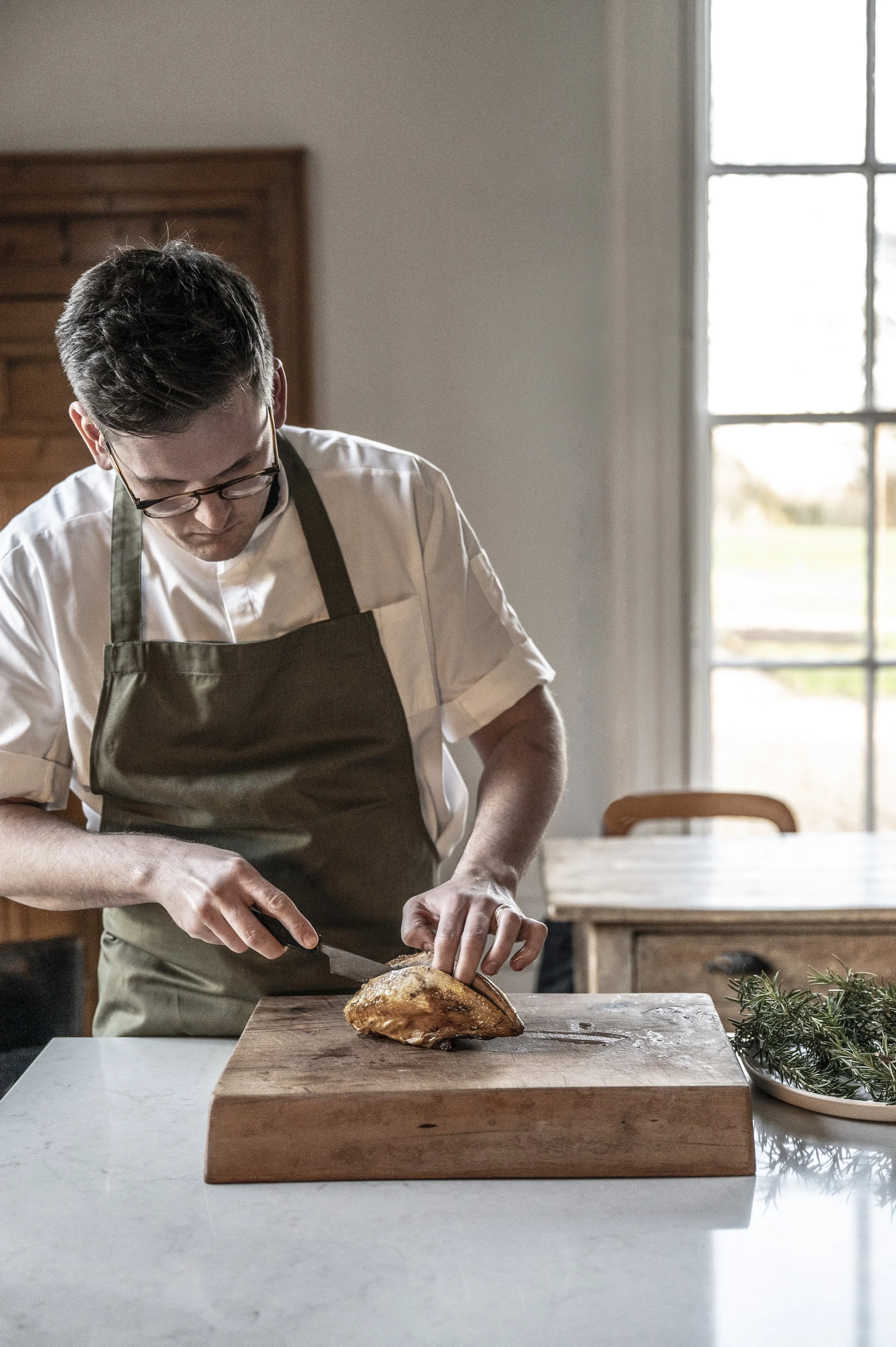
Curating a Winter Menu
When it comes to crafting a winter menu, the preparation begins months earlier—back in late summer. Seasonal abundance is carefully preserved to bring brightness to the darker, colder months.
Summer’s harvest of hedgerow berries, plums, and cherries is processed and stored at its peak, ready for when it's needed most. Cherries, gently cooked whole on the kernel in syrup, develop a rich marzipan-like flavour—reminiscent of the Italian Morello cherry jars traditionally opened at Christmas. Berries are frozen on trays before being transferred to boxes, preventing them from sticking together and making it easy to portion out exactly what's needed. Freezing is an excellent way to extend the season, locking in both flavour and nutrition. These preserved berries find their way into desserts year-round and serve as a vibrant addition to breakfast, whether stirred into overnight oats or a cold barley pudding topped with freshly whipped Manor Farm yoghurt.
But it’s not just fruit that’s tucked away for the winter months. Vegetables like tender baby fennel bulbs and spring onions are quickly steamed and blast frozen, making them the perfect companion to Launde lamb leg or Fosse Meadow chicken long after their growing season has passed.
Beyond freezing, I also handpick wild ingredients like dandelion, chive, elderberry, and wild garlic buds and preserve them as capers. First stored in salt for two weeks before being rinsed and sweet-pickled, these capers add a punch of flavour to umami-rich sauces, beetroot salads, and cured fish platters—offering a far superior alternative to their standard supermarket counterparts.
Much of this bounty may already be growing in your own garden or nearby, waiting to be foraged and preserved. With little effort, you can have a jar of these flavourful capers ready to elevate a Sunday roast—simply add a spoonful to a pan with butter while glazing parsnips or carrots for a deeply satisfying result.
The first capers to look out for in the season are dandelion capers, best picked in early to late spring before the buds fully open. Later, in June, as wild garlic flowers begin to fade, their leftover seed pods can also be harvested and pickled. Even the stems can be chopped and stored, ready to add a burst of flavour whenever needed.
Preserving food in season is more than just a practical task—it’s a way to bring the warmth of summer into the coldest months. Whether you’re freezing a handful of blackberries, saving a jar of capers, or simply planning ahead for next winter’s pantry, these small acts of preparation make a world of difference when the landscape outside feels bare.
With each Dining Club we host, the garden shifts once again, as the preserved and stored give way to the fresh, vibrant flavours of a new season—bridging the past and present in every dish. Please find our next Dining Club dates here.